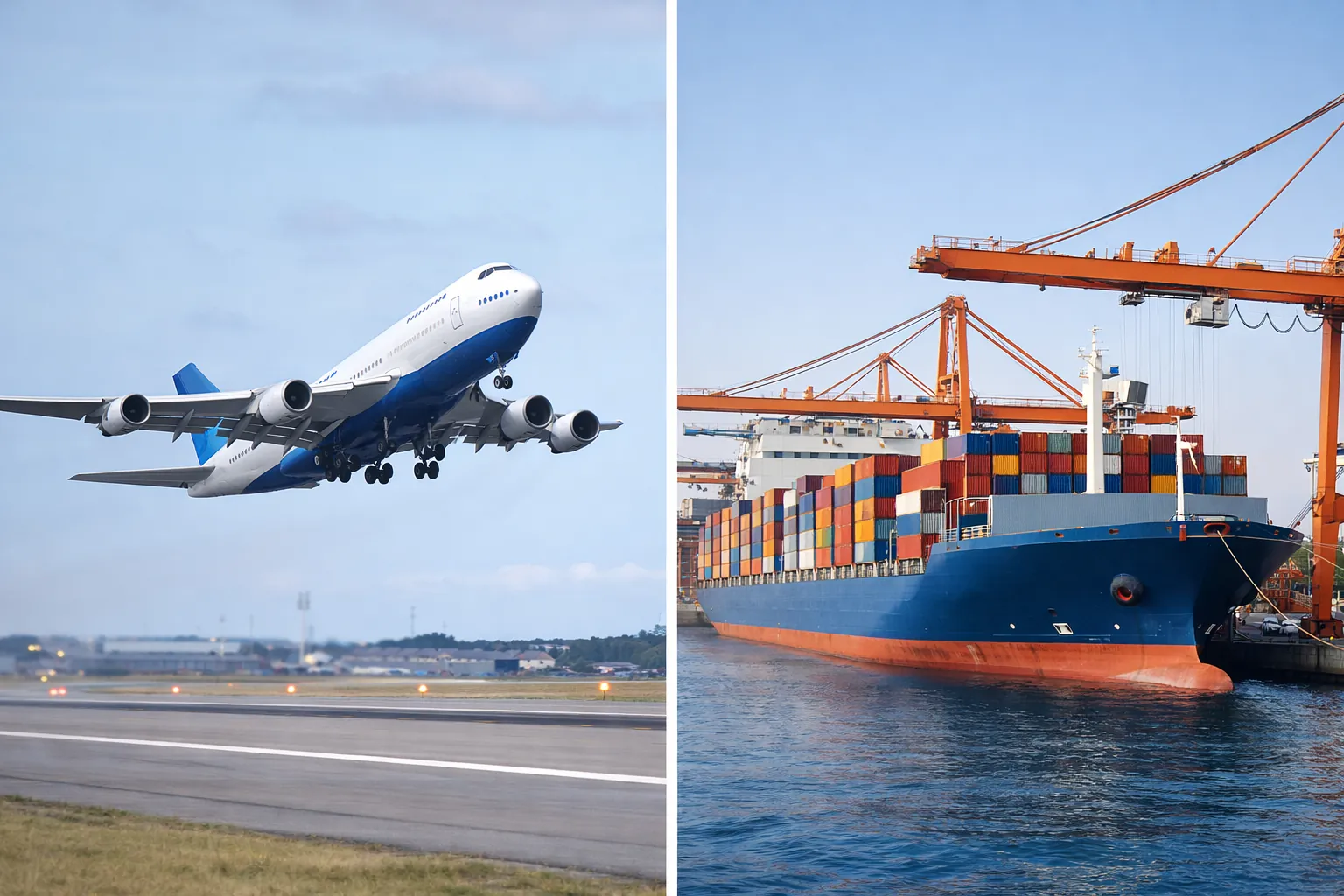
Sea Freight (Ocean)
Sea freight is the most cost-effective option for large or heavy shipments. Ocean freight costs are significantly lower per kilogram than air — typically 4–5 times cheaper. A 20-foot FCL (Full Container Load) shipment from China to the US West Coast currently runs approximately $2,000–$2,650, while air freight for the equivalent weight would cost far more. Transit times to the USA and UK are typically 20–40 days depending on the port of origin and destination.
- 4–5x cheaper per kg than air freight
- Ideal for large volume, heavy, or bulky goods
- Transit: 20–40 days to USA/UK ports
- Plan well in advance — sea freight requires longer lead times
Air Freight
Air freight is significantly faster — typically 7–12 days to the USA — but also far more expensive. Air cargo is justified for urgent replenishment of high-margin products, time-sensitive launches, or small, lightweight shipments where speed outweighs cost. A 500 kg air shipment from China to the USA could cost $2,500–$4,000 compared to approximately $500 by sea freight.
- 7–12 days transit to USA/UK
- Best for urgent, high-value, or lightweight goods
- Significantly higher cost per kg than sea
- Options: standard air (100–500 kg), express courier (DHL/UPS for small parcels)
A Strategic Mix of Both
Many experienced sellers use a hybrid approach: send the majority of each inventory replenishment by sea freight for cost efficiency, while keeping a smaller air freight buffer for emergency restocks or fast-moving seasonal products. This balances cost against stockout risk.
- Send 70–80% of inventory by sea for ongoing replenishment
- Reserve air freight for emergency restocks when stock falls below 30 days
- Use express courier for samples, prototypes, and very small orders
- Plan sea freight reorders when you have 60 days of stock remaining
Tips for Reducing Shipping Costs
Regardless of shipping method, these practices help reduce costs and avoid common pitfalls.
- Consolidate shipments — FCL is cheaper per CBM than LCL when volume is sufficient
- Use an experienced freight forwarder for competitive rates and reliable service
- Book sea freight during low seasons to avoid Chinese New Year surcharges
- Confirm accurate carton dimensions and weights to avoid re-weighing fees
- Compare quotes from multiple freight forwarders before confirming
Which Method Is Right for You?
The decision comes down to urgency and volume. As a general rule: use sea freight when your order is large, your stock levels are healthy, and you can plan 60–90 days ahead. Use air freight when you need inventory quickly, your order is small and lightweight, or the cost of running out of stock exceeds the air premium.
- Large order + healthy stock levels = sea freight
- Urgent restock or lightweight goods = air freight
- New product launch with uncertain demand = air freight for first batch
- Established high-volume product = sea freight for ongoing replenishment
Get a free quote within 24 hours. No commitment, no hidden fees.
Need help sourcing products from China?
Contact Saeed Global Services for a free sourcing consultation. We handle supplier verification, price negotiation, quality inspection and shipping — end to end.