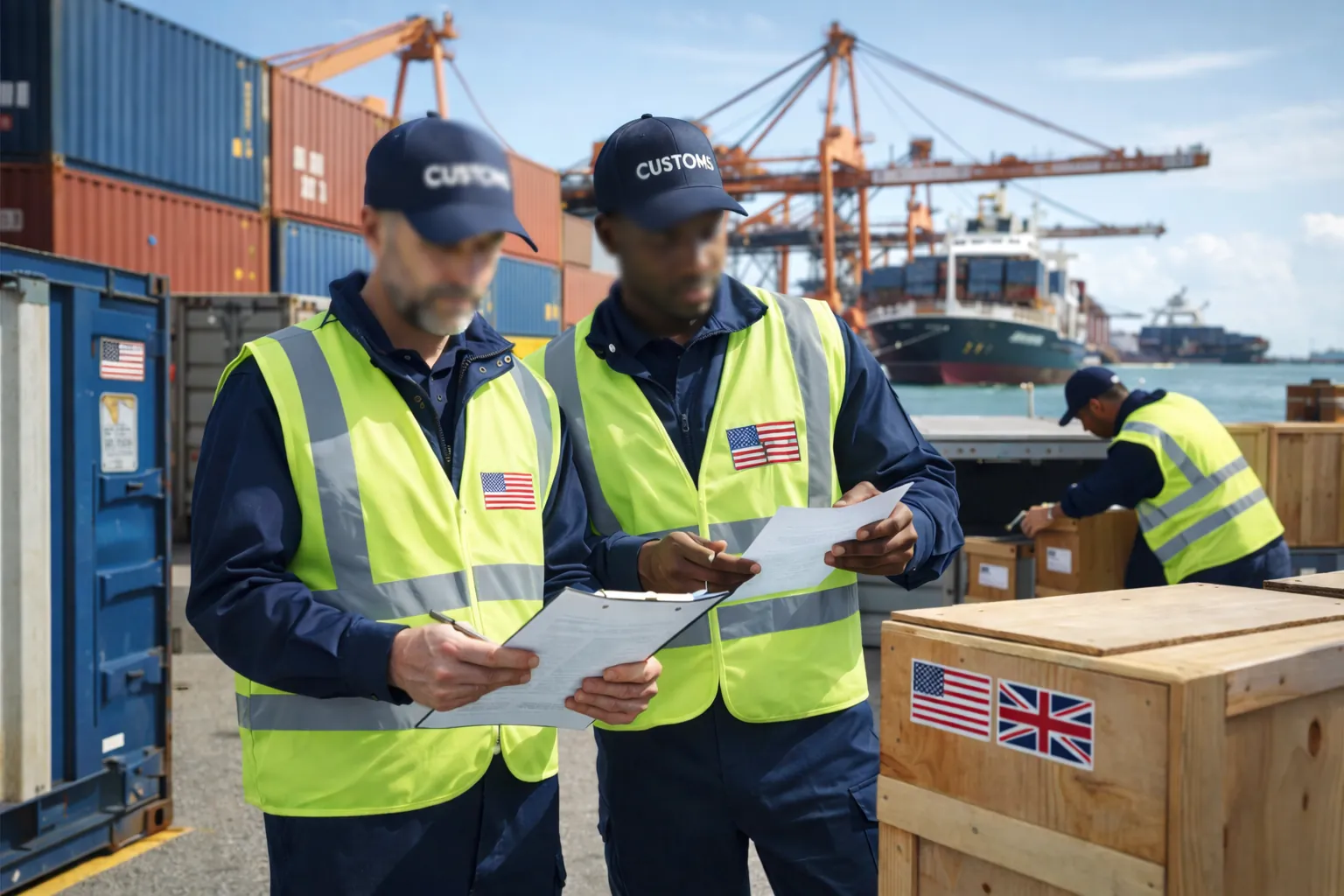
You Are the Importer of Record
As the buyer, you are legally the Importer of Record (IOR) for your shipment. This means your business name must appear on all customs documents as the consignee. Do not list Amazon as the consignee for FBA shipments — this will cause customs to hold your goods. Your registered business (or US LLC) must be named as the importer on all documentation.
- Your business name must appear as consignee on all customs documents
- Never use Amazon’s name as consignee for FBA shipments
- Ensure your business is registered for import in your destination country
- Work with a customs broker if you are importing commercially for the first time
Essential Import Documents
Having accurate, complete documentation is the single most important factor in smooth customs clearance. Missing or incorrect documents are the leading cause of customs delays. At minimum you will need the following documents for every commercial shipment.
- Commercial Invoice — itemised list of goods, quantities, unit values, country of origin, and HS codes
- Packing List — detailed breakdown of carton contents, weights, and dimensions
- Bill of Lading (sea) or Air Waybill (air) — the shipping contract issued by the carrier
- Certificate of Origin — required for duty preferential treatment under some trade agreements
- Product safety certificates — CE, FCC, FDA as required for your product category
HS Codes and Duty Rates
Every imported product must be classified using the Harmonised System (HS) tariff code. Customs authorities use this code to calculate the applicable import duty rate. Misclassifying a product — even unintentionally — can result in fines, delays, or seizure. US duties on consumer goods typically range from 0–20%, plus any applicable Section 301 tariffs on Chinese goods (7.5–25%). UK duties are typically 0–12% plus 20% VAT.
- Research the correct HS code for your product before shipment
- US Section 301 tariffs add 7.5–25% on many Chinese goods — check your product category
- UK: 0–12% customs duty plus 20% VAT on imports from China
- Use a customs broker or government tariff lookup tool to confirm exact rates
- Incorrect HS codes can result in fines and shipment delays
Working With a Customs Broker
A licensed customs broker prepares and submits customs entry filings on your behalf, ensuring compliance with all import regulations. Your freight forwarder often provides customs brokerage as part of their service. A broker will also advise on any required product certifications — FCC certification for electronics, FDA registration for food and cosmetics, CPSC compliance for children’s products.
- Customs brokers handle entry filing and ensure document compliance
- Your freight forwarder often includes brokerage as part of their service
- Brokers advise on required certifications for your product category
- For first-time importers, a broker is highly recommended — errors are costly
Clearance Timeline and Delays
Under normal conditions, customs clearance takes 1–5 business days. However, during peak seasons (Q4, Chinese New Year), document errors, or random inspections, clearance can take 2–4 weeks. Plan your inventory lead times to accommodate potential customs holds. Never assume customs will clear on the first working day.
- Normal clearance: 1–5 business days
- Peak seasons and document errors can cause 2–4 week delays
- Buffer extra time in your replenishment schedule for customs holds
- If held for inspection — a customs broker resolves this fastest
Special Product Requirements
Certain product categories require additional certifications, licences, or special handling at customs. Check whether your product falls into any restricted category before your first shipment.
- Electronics: FCC certification (USA), CE marking (EU/UK)
- Food and cosmetics: FDA registration (USA), cosmetic notification (EU)
- Children’s products: CPSC compliance and ASTM/EN71 safety standards
- Wood packaging: must be ISPM-15 fumigated and stamped
- Textiles: may require country of origin labelling compliance
Get a free quote within 24 hours. No commitment, no hidden fees.
Need help sourcing products from China?
Contact Saeed Global Services for a free sourcing consultation. We handle supplier verification, price negotiation, quality inspection and shipping — end to end.