Compliance is not a supplier certificate problem
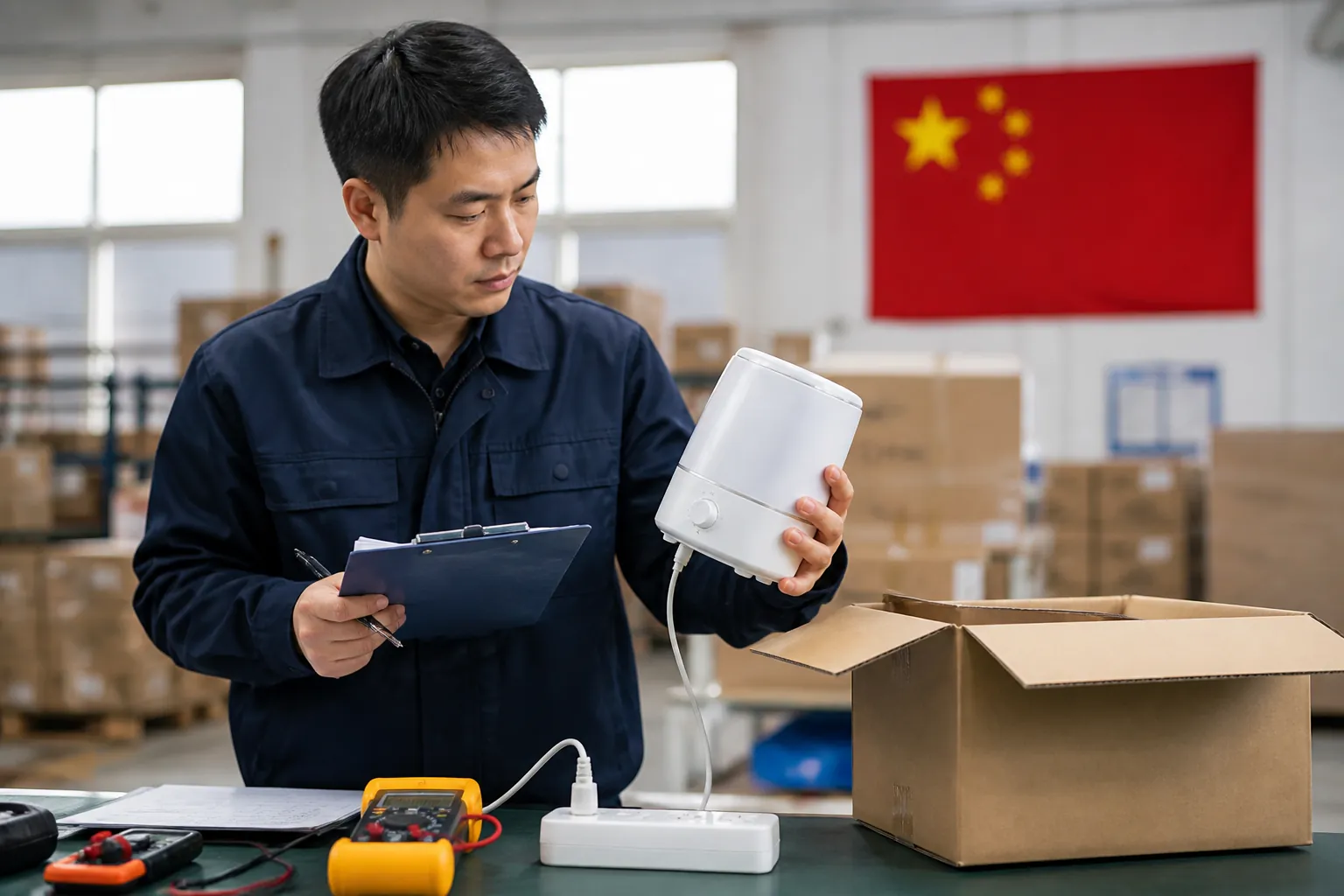
China product compliance for Amazon, Shopify, and wholesale ecommerce is the importer’s responsibility, not something a factory can solve by emailing a few PDF files after production. A Chinese supplier may have genuine test reports, outdated reports, reports for a similar model, or reports issued for another buyer’s exact configuration. Your job is to prove that the product you place on the market matches the legal requirements in the destination country and the platform requirements where you sell.
The hard part is that compliance sits across product design, materials, packaging, labelling, test standards, factory documents, listing approval, and shipment records. If you only check it after goods are finished, the usual options are expensive: rework, relabelling, retesting, blocked Amazon inventory, customs holds, or destroying stock that cannot legally be sold. If you need a sourcing partner to build these checks into supplier selection and production, our China sourcing agent process is designed around that sequence.
- Product law applies by market, not by factory location
- Amazon can require documents even when customs released the goods
- A test report is useful only if it matches your exact product
- Compliance should be checked before tooling, deposit, or bulk materials
Most sourcing failures happen because buyers ask a broad question such as, “Do you have CE?” or “Is this FDA approved?” The supplier says yes, sends a certificate, and everyone moves forward. That is not a compliance check. The correct question is narrower: which regulation applies, which standard was tested, which SKU and model were covered, which materials were tested, which lab issued the report, when was it issued, and does the finished product carry the required marks and warnings?
For Amazon sellers, compliance is also commercial risk. Amazon may suppress a listing, request safety documentation, hold FBA inventory, or reject documents that do not match the product detail page. A shipment can be legally importable but still unsellable on Amazon if the listing category has platform-specific document rules, image rules, warning requirements, or age grading requirements.
Start with the market and the product category
There is no single checklist called “CE FCC FDA CPSIA sourcing China” that applies to every product. The same item can fall under different rules depending on where it is sold, who uses it, what it is made from, how it is powered, whether it touches food or skin, whether it is intended for children, and whether it has wireless or electrical functions. A stainless steel tumbler, a baby feeding spoon, a Bluetooth kitchen scale, and a cosmetic jar each have a different compliance route.
Before asking suppliers for certificates, classify the product in practical terms. Write down the intended use, user age, materials, power source, wireless functions, food contact, skin contact, chemical exposure, packaging claims, and countries of sale. This classification determines which laws and tests matter and prevents suppliers from sending irrelevant documents.
| Market | Common triggers | Typical evidence | Common failure |
|---|---|---|---|
| USA | Children’s use, electronics, food contact, cosmetics, medical claims | CPC, GCC, FCC report, FDA facility or product records where applicable | Product sold as adult item but packaging or listing suggests child use |
| EU | CE products, toys, electrical goods, batteries, chemicals, food contact | Declaration of Conformity, test reports, technical file, labels | CE mark used without the correct directive or harmonised standard |
| UK | UKCA categories, toys, electronics, cosmetics, batteries | Declaration, test reports, responsible person details where needed | EU paperwork copied without checking UK marking and address rules |
| Amazon | Restricted categories, safety-sensitive products, children’s products | Compliance documents uploaded to Seller Central | Documents do not match title, model, images, or packaging |
US product compliance imports usually start with federal rules, but state rules can also matter. Examples include California Proposition 65 warnings, state packaging rules, and chemical restrictions that affect products sold nationwide through ecommerce. For EU product compliance from China, the importer placing goods on the EU market has duties for traceability, technical documentation, conformity assessment, and market surveillance cooperation. For the UK, sellers must check current UKCA and UK importer or responsible person requirements instead of assuming EU paperwork is enough.
- Define the country of sale before confirming the supplier
- Separate legal import requirements from Amazon listing requirements
- Check whether the product is for adults, children, or both
- Record materials, coatings, batteries, wireless modules, and accessories
Key compliance areas sellers source from China most often miss
Compliance problems are usually visible in the product if you know where to look. They show up in the material choice, coating, charger, battery, magnet strength, small parts, warning label, packaging language, instruction manual, or claims on the listing. A factory may manufacture the hardware correctly but still ship non-compliant goods because the buyer added a private label box, changed a cable, selected a cheaper plastic, or copied competitor wording.
Do not treat compliance as a final document folder. It is a control plan. When the product has multiple risk factors, build the checks into the specification sheet and purchase order so the supplier cannot substitute parts without written approval.
Electrical, electronic, and wireless products
Electronics often need more than one compliance route. In the US, radiofrequency devices may require FCC equipment authorisation depending on the device type. In the EU, a product may involve the Low Voltage Directive, EMC Directive, Radio Equipment Directive, RoHS rules, battery rules, and WEEE obligations. A Bluetooth product is not just a normal electronic item because the wireless module introduces additional testing and documentation.
Common mistakes include using an unapproved charger, changing the PCB after testing, adding a wireless module not covered by the report, printing CE on the product without a valid Declaration of Conformity, or assuming one factory report covers every colour and model. If the supplier is selling through domestic China channels or 1688, do not assume export compliance exists. Our Alibaba sourcing agent work often starts by separating real export-ready manufacturers from domestic suppliers using borrowed reports.
Children’s products and toys
Children’s products are one of the fastest ways for a new importer to get into trouble. In the US, many children’s products require third-party testing and a Children’s Product Certificate. Toys, children’s jewellery, sleep products, feeding items, and learning products can trigger strict chemical, mechanical, flammability, tracking label, and warning rules. In the EU, toys require CE marking under the Toy Safety Directive and supporting technical documentation.
The problem is not only the product itself. Packaging, advertising images, listing title, colour scheme, cartoon artwork, age references, and use instructions can all make a product appear intended for children. A supplier may call an item “adult desk decor,” while the Amazon listing shows a toddler holding it. That mismatch can cause document rejection and regulatory risk.
Food contact, cosmetics, and health claims
Food contact products need material-specific checks. Stainless steel, silicone, plastics, bamboo composites, paints, inks, and coatings can all require migration or extractable testing depending on market. For cosmetics, the risk is not only ingredients but also claims. A cream, serum, patch, or device that claims to treat acne, pain, infection, hair loss, or disease can move into drug or medical device territory.
Be careful with supplier claims such as “FDA certified” or “food grade.” The US FDA does not issue a simple universal approval certificate for every consumer product coming from China. You need to identify the actual rule that applies to the material, food contact use, facility, product type, or import process. In the EU and UK, food contact and cosmetic products also need documentation, responsible party controls, and correct labelling.
- Wireless function added after testing
- Children’s use created by listing images or packaging
- Food contact material changed to reduce cost
- Health claim copied from a competitor without legal review
Documents to request before you pay a deposit
Compliance documents should be requested before the deposit because they affect supplier selection, production cost, lead time, and market access. If a supplier cannot provide relevant documents at the quotation stage, you need to decide whether to pay for new testing, choose another supplier, adjust the product, or avoid the category. A cheap quotation with no valid compliance route is not cheap after failed testing.
Ask for documents by exact requirement, not by generic certificate name. Also ask for editable product specifications, BOM details, material declarations, packaging artwork, and factory licence details where relevant. A test report alone is not enough if you cannot connect it to the actual goods being made for your order.
| Document | Use | What to verify | Red flag |
|---|---|---|---|
| Test report | Shows sample tested against a standard | Model, photos, standard, lab, date, result | Report photos do not match product |
| Declaration of Conformity | EU or UK conformity statement | Manufacturer, directives, standards, signature | CE declared with no test evidence |
| CPC or GCC | US children’s or general product certification | Importer details, test lab, rules cited | Certificate names another importer |
| Bill of materials | Links components to compliance risk | Plastic, coating, battery, cable, ink | Supplier refuses component details |
| Packaging artwork | Confirms warnings and market language | Marks, warnings, importer address, age grading | Labels added only after goods arrive |
Read the report like an operator, not like a buyer looking for a stamp. Check whether the test standard is relevant for the target market. Check whether the report covers the exact material, model, rating, power supply, age grade, coating, battery, and accessory set. Check whether the issuing laboratory is recognised by the market or platform for the specific testing scope. Check whether the report belongs to the factory, a trading company, or another brand owner.
For Amazon, the product title, detail page, packaging, model number, brand name, and compliance documents should tell the same story. If the test report says Model X-100, the product page says “SGS Pro Kitchen Scale,” the packaging says “Model KS-2,” and the invoice says “electronic gift,” the review team may reject it or ask for clarification. Keep names and identifiers consistent from quotation to inspection to FBA shipment.
- Request reports before the purchase order is signed
- Match document photos to the exact product configuration
- Check standards and rules named in the report
- Keep model numbers consistent across listing, invoice, packaging, and lab files
Testing strategy: existing reports, gap testing, or full testing
There are three practical testing routes when sourcing from China. You can rely on existing supplier reports if they are valid and match your product. You can run gap testing if most evidence is acceptable but a material, accessory, market, or claim is not covered. Or you can run full testing when the product is new, customised, high risk, or intended for a tightly controlled category.
The right route depends on risk, not only order size. A small first order of children’s jewellery can carry more compliance risk than a larger order of plain adult storage baskets. If you are developing a private label product for Amazon FBA, build testing time into the launch calendar before booking inspection and freight. Our Amazon FBA sourcing work normally maps compliance, packaging, barcode, carton, and inspection checks before production closes.
| Route | Best used when | Main risk | Operational note |
|---|---|---|---|
| Use existing reports | Standard model, same materials, recent report | Report covers a different version | Verify model, photos, BOM, lab scope |
| Gap testing | One material, market, or label claim is missing | Hidden design change fails later | Freeze the sample and specifications first |
| Full testing | New design, children’s item, electronics, high risk category | Longer launch timeline | Test a production-representative sample |
Never test a sample that is not representative of production. Factories sometimes send a better sample than the bulk goods: thicker coating, higher-grade plastic, different battery cell, stronger stitching, safer charger, or cleaner ink. If that sample passes and the production order uses cheaper inputs, the report does not protect you. Tie the approved sample to the BOM and include no-substitution language in the purchase order.
Testing should also follow the final selling configuration. If the product is sold as a bundle, the bundle may need evaluation. If the accessory is sourced from another factory, it should be included in the risk review. If you change packaging claims, add age recommendations, add “BPA free,” add “medical grade,” or claim compatibility with food, babies, pets, or skin, the documentation may need to change.
- Test production-representative samples, not showroom samples
- Freeze the BOM before lab submission
- Include chargers, batteries, cables, coatings, and accessories
- Retest when materials, suppliers, design, or claims change
Labelling, packaging, and listing claims are compliance items
Many sellers focus on the product and forget that compliance also lives on the label, instruction manual, packaging, and online listing. Marks, warnings, model numbers, importer details, tracking labels, age grades, disposal marks, battery warnings, and language requirements may be mandatory depending on the market and product. If the factory prints packaging before compliance review, the cheapest correction may be stickers, and stickers may not be acceptable for every mark or every marketplace.
Amazon listings add another layer. A claim that looks like conversion copy can trigger a document request. Words such as antibacterial, medical, therapeutic, infant, child-safe, fireproof, organic, eco-certified, non-toxic, FDA approved, or CE certified should not be used unless the product documentation supports them. If you cannot prove the claim, remove it before listing and packaging approval.
US examples
For US product compliance imports, children’s products often need tracking information, manufacturer or importer details, batch or production information, and certificates based on testing. Certain products need cautionary statements. Electronic devices may need FCC-related labelling or user manual statements depending on the authorisation route. Food, cosmetic, and health-related products may need ingredient, identity, net quantity, warning, facility, or claim review depending on the category.
California Proposition 65 is also a practical ecommerce issue because many sellers ship nationwide. If there is a chemical exposure risk and no applicable safe harbour or test basis, warning obligations may arise for California sales. Do not rely on a supplier’s casual “Prop 65 pass” statement without seeing the test basis and understanding whether it applies to the finished product and exposure route.
EU and UK examples
For EU product compliance from China, CE marking is not a decoration. It means the product falls under one or more CE-related laws and the responsible economic operator has completed the conformity process. The Declaration of Conformity should identify the product, manufacturer, legislation, standards, and authorised signature. The technical file should support the declaration if a market surveillance authority asks for it.
EU and UK packaging may also need importer or responsible person details, language-specific safety information, WEEE or battery information, textile fibre composition, cosmetic responsible person details, or food contact information depending on the product. If you sell through multiple EU countries, language requirements can affect packaging layout and cost. This needs to be known before the packaging dieline is approved.
- Review packaging artwork before mass printing
- Remove claims that documents cannot support
- Confirm importer, responsible person, and traceability details
- Align labels, manual, online listing, and test reports
Build compliance into the sourcing workflow
A workable compliance workflow is simple, but it must happen in the right order. First classify the product and market. Then screen suppliers for relevant experience and documents. Then check the sample and specification. Then decide whether existing reports are enough or testing is needed. Then approve packaging, labels, and listing claims. Then inspect production against the approved sample and documents before shipment.
This sequence prevents the most expensive version of the problem: discovering a compliance gap after the goods have been packed and paid for. It also gives you leverage. A supplier is more cooperative before the deposit than after they have produced a full order. If you already have a supplier and need an independent check before shipment, our China quality inspection service can verify labels, markings, model numbers, and physical product details against the compliance file as part of a pre-shipment inspection.
- Classify the product by market, user, material, power source, and claims
- Request exact reports, declarations, BOM details, and packaging samples
- Validate documents against the final SKU and supplier identity
- Run gap or full testing before bulk production when evidence is weak
The purchase order should include compliance terms, not only price and delivery date. Name the product specification, approved sample, materials, test requirements, labelling requirements, packaging artwork version, allowed substitutions, and document delivery deadlines. State that components cannot be changed without written approval. State that final payment depends on inspection and document completion where commercially possible.
Inspections should not replace testing, but they are a useful control. An inspector can check whether the production goods match the approved sample, whether required labels are present, whether packaging artwork is correct, whether model numbers match, whether instruction manuals are included, and whether obvious substitutions occurred. For products with batteries, electronics, sharp edges, children’s use, or food contact, inspection checklists should be adapted to the compliance file instead of using a generic AQL checklist only.
- Put compliance requirements into the purchase order
- Lock packaging artwork before printing
- Use inspections to verify consistency with the approved file
- Keep shipment records, test files, declarations, and supplier confirmations together
Common document traps from Chinese suppliers
Most Chinese suppliers are not trying to create a legal problem for you. They are trying to close the order with the documents they already have. The issue is that many factories use certificate language loosely. A sales representative may call any report a certificate, call a registration an approval, or call a lab logo proof that everything is covered. Your check has to separate useful evidence from sales material.
One common trap is the “certificate of compliance” issued by a private company that does not show meaningful product testing. Another is a CE certificate issued by a body that was not required for the product category and does not include the technical basis. Another is a test report for a base model that excludes the accessory, colour, coating, battery, charger, or packaging claim used in your order. Another is a genuine report that expired in practical terms because the standard, law, material, or design has changed.
| Supplier document | What it may mean | What to ask next |
|---|---|---|
| CE certificate only | A declaration support document or weak sales paper | Declaration, test reports, directives, standards |
| FDA certificate | Registration, listing, or unrelated document | Exact FDA requirement and product category basis |
| FCC certificate | May cover one module or finished device | FCC ID, test report, device photos, user manual statements |
| RoHS pass | Restricted substance test on submitted samples | Covered components, homogeneous materials, date |
| Amazon approved | Another seller may have listed a similar product | Documents matching your brand, SKU, and listing |
Be cautious when a supplier says the product has been exported to Europe or the US for years. That may be true, but it does not prove your specific SKU is compliant. Large brands may have their own testing and technical files. Another importer may have accepted the risk. The product may have passed customs but never faced a platform document request. Your file must stand on its own.
Also watch for last-minute substitutions. If the supplier cannot buy the same battery cell, pigment, coating, magnet, charger, textile, adhesive, or silicone compound during production, they may swap it without telling you. This can invalidate previous evidence. For sensitive categories, ask for component photos, supplier batch details, and packaging checks during production, not only a final carton count.
- Generic certificates with no standard or model details
- Reports issued to another brand or unrelated trading company
- Photos in reports that do not match the ordered product
- Supplier claims that export history equals compliance
Practical checklist before placing the order
The goal is not to become a lawyer or a test lab. The goal is to stop obvious compliance failures before money is committed and to know when specialist testing or legal advice is needed. For low-risk products, the file may be simple. For children’s products, electronics, food contact, cosmetics, medical-adjacent products, and chemical-heavy products, the file should be more formal and should be reviewed before the supplier starts bulk production.
Use the checklist below before paying a deposit. If you cannot answer several points, pause the order. A delayed purchase order is normally cheaper than failed lab testing, unsellable FBA stock, relabelled cartons, or a recall. Compliance is a buying discipline, not an admin task after shipping.
- Target markets confirmed for USA, EU, UK, or other countries
- Product category, user age, materials, power source, and claims recorded
- Applicable CE, FCC, FDA, CPSIA, RoHS, food contact, or other rules identified
- Supplier documents checked against exact model, photos, BOM, and lab scope
After that first screen, confirm the commercial controls. The quotation should include compliant materials and packaging, not a cheaper domestic-market version. The purchase order should name the approved sample and document set. The inspection checklist should include compliance-related checks. Your Amazon listing should be written from the documents, not from competitor listings. Your archive should include reports, declarations, certificates, invoices, shipment records, and communication proving what was ordered and shipped.
If the product is borderline, get a lab quote or specialist review before production. This is especially important when a product has children’s use, lithium batteries, wireless features, mains power, skin contact, food contact, sharp edges, magnets, textile flammability risk, cosmetic ingredients, or disease-related claims. The cost of finding out early is usually lower than correcting finished goods.
Frequently Asked Questions
what is a reasonable MOQ for a first order?
A reasonable MOQ for a first compliant order is the smallest quantity that still lets the factory use the correct materials, packaging, and process. Do not push MOQ so low that the supplier switches to domestic-market components or refuses proper labelling. For higher-risk products, spend budget on sample validation and testing before trying to scale the first order.
can I use my supplier's CE certificate for Amazon Europe?
You cannot rely on a supplier’s CE certificate by itself. You need the relevant Declaration of Conformity, supporting test reports, product photos, standards, directives, and packaging or label evidence. The documents must match your exact SKU and the EU market requirements.
can Amazon ask for compliance documents after my product is already selling?
Yes, Amazon can ask for compliance documents after your listing is live. This often happens after category reviews, customer complaints, policy updates, or automated checks. Keep the compliance file ready before inventory reaches FBA because document review can block sales.
do all electronic products from China need FCC testing?
FCC applies when a product emits radiofrequency energy or contains wireless or electronic functions covered by FCC rules. Bluetooth, Wi-Fi, remote controls, digital electronics, power supplies, and LED products can all need review. The exact approval route depends on the device and configuration.
what products need CPSIA when importing from China?
CPSIA applies to many children’s products sold in the United States, not to every consumer product. If the product is intended mainly for children aged 12 or younger, third-party testing and a Children’s Product Certificate may be required. Listing images, packaging, and marketing can affect whether a product is treated as a children’s product.
when should I pay for third party testing instead of using factory reports?
Use a third-party lab when supplier documents are missing, outdated, mismatched, or not accepted for your market. You should also use one for children’s products, electronics, wireless items, food contact goods, cosmetics, and any product with safety or health claims. Supplier reports are useful only after they have been verified against the exact SKU.
Sources
- Product Compliance Amazon
- CE marking European Commission
- Children’s Product Certificate (CPC) U.S. Consumer Product Safety Commission
- Equipment Authorization Federal Communications Commission
- Prior Notice of Imported Foods U.S. Food and Drug Administration
Get a free quote within 24 hours. No commitment, no hidden fees.
Need help sourcing products from China?
Contact Saeed Global Services for a free sourcing consultation. We handle supplier verification, price negotiation, quality inspection and shipping — end to end.